 By Claire Whitaker
Updated November 2026
A side table vs end table comparison usually comes down to one practical question: where will the table sit, and what will it need to do there? In most homes the two terms describe nearly the same piece of furniture, a small table placed beside a seat. The real differences show up in height, footprint and how the table is styled. If you want a table that sits at the arm of a sofa and holds a lamp and a drink, either option works. If you need a flexible piece for a corner, a bed, or a chair set, the choice depends on the details below.
| Criterion | Side table | End table |
|---|---|---|
| Typical placement | Beside any seat: chair, loveseat, bed, or reading nook | At the end of a sofa or sectional, usually on an arm end |
| Common height | Often 18 to 26 inches, matched to seat or bed height | Often 20 to 26 inches, matched to sofa arm height |
| Typical top size | Roughly 12 to 20 inches across or deep | Roughly 16 to 24 inches across or deep |
| Flexibility of use | High: moves easily between rooms and seating types | Moderate: designed around a sofa line |
| Storage options | Shelves, drawers, or open designs, depending on the model | Frequently includes a drawer or lower shelf |
| Best for small spaces | Strong, especially narrow or round styles | Good when a sofa sits against a wall |
Placement: Where Each Table Belongs
In everyday use, the difference between a side table and an end table is mostly about location. An end table is typically set at the end of a sofa, sectional or loveseat, so it sits within arm’s reach of someone sitting at that end. The name comes from that position. A side table is a broader term. It can sit next to an armchair, a recliner, a bed, or even a window bench.
Winner for placement: side table, because it works across more seating types. If your living room has a sofa, two chairs and a reading corner, a side table gives you more places to use it. An end table is the better pick only when you already know you want a piece tied to a sofa end.
When measuring for either piece, keep the table about 2 to 4 inches below the seat arm or seat cushion top. That range keeps a lamp or drink easy to reach without forcing your elbow up. For a bed, many designers aim for the tabletop to sit level with or slightly above the mattress top, which is the same logic a bedside side table follows. For more on measuring, see End and Side Table: How to Choose, Measure and Style Yours (2026).
Height and Size: Which Option Fits Your Seating?
Height matters more than the name. A table that is too tall will look awkward next to a low sofa, and one that is too short forces you to lean. Manufacturers usually list dimensions as height, width and depth. Compare those numbers to your seat, not to the label on the box.
- Measure the seat cushion or arm height from the floor.
- Subtract 2 to 4 inches for a comfortable reach.
- Choose a top width that leaves at least 12 inches of clear space for a lamp and a cup.
Winner for height and size: end table for a sofa, because the category is built around standard arm heights. Side tables win when you want a size that varies widely. Round side tables with a 14-inch top, for example, fit tight corners that a wider end table cannot. If you are weighing a round design against a rectangular one, the comparison in Round vs Rectangular Coffee Tables explains how footprint changes the room’s flow.
Style and Visual Weight
Style is where many shoppers feel the difference most. End tables are often sold as matched pieces, sometimes in pairs, with curved legs, turned posts or a shared finish that mirrors a sofa frame. Side tables tend to be sold as standalone accents, which makes them easier to mix with other finishes.
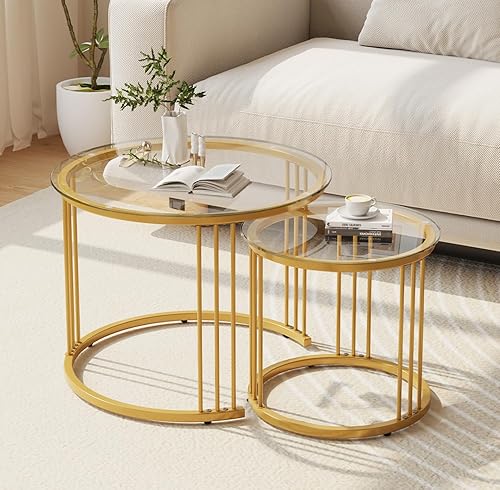
Glass tops are a common choice for small rooms because they reduce visual weight. A clear top lets you see the floor beneath, which helps a tight space feel open. If you are weighing a glass top, the trade-offs are covered in Glass vs Wood Coffee Tables and Glass vs Marble Coffee Tables.
Winner for style: side table, mainly because you have more freedom to mix materials. An end table works best when you want a coordinated set. A side table lets you match one wood tone and add a contrasting metal or stone top. If you are considering a marble top specifically, Side Table Marble Top vs Wood Top: Which Should You Choose? goes deeper into that choice.
Storage and Function
End tables often come with a drawer or lower shelf, since their designers expect them to hold remote controls, coasters and magazines. Side tables are more varied. Some are open, with a single shelf, and others have a drawer, a cabinet or a pull-out tray.
Open storage works well in small rooms, since it avoids blocking light. Closed storage hides clutter but adds bulk. If you want shelves, the trade-offs are similar to those in Open-Shelf vs. Closed Storage Coffee Table Comparison.
Winner for storage: end table, since drawer designs are more common in that category. Side tables win on flexibility, because you can choose an open or closed design to match the room.
Bedroom Use: Side Table or Nightstand?
Many people search for side table vs end table when they really mean a bedside piece. In that case, a nightstand is usually the better category, since it is designed for height and drawer space near a bed. If you are weighing those two, Night Stand vs End Table (2026): Which Is Better for Your Bedroom? and End Table vs Nightstand: Which Should You Choose? (2026) compare them directly.
A wooden bed side table is a middle option. It works for a bed when you want a warmer finish and a smaller footprint than a full nightstand. See Wooden Bed Side Table (2026): Which Should You Choose? for sizing guidance.
Safety and Stability
For tables with glass tops, check that the glass is tempered or laminated safety glass, and confirm the edges are finished. Manufacturers usually state this in the product specifications. Tabletop glass should be secured to the base with the fittings the maker supplies. If you have young children or pets, consider a rounded profile, which reduces injury from bumps. A lightweight table can tip, so check the base width and the weight rating. For a table that will hold a heavy lamp or a stack of books, choose a base that is at least as wide as the top’s footprint. Consult a professional installer if you are fitting a glass top to an unusual base.
Which Should You Choose?
- Choose an end table if you have a sofa or sectional with clear arm ends and want a matching set.
- Choose a side table if you want one piece that works beside a chair, bed or sofa, and you value flexibility.
- Choose a side table if your room is small and you want a round or narrow footprint.
- Choose an end table if you need a drawer or lower shelf in the living room.
- Choose a nightstand instead if the table is for a bedroom, since its height and storage are built for that use.
Our Picks
Side table option: A round accent table with a small top works in most rooms. Look for the View on Amazon, a simple square design that suits many interiors.
End table option: A matched wood design with a drawer suits a sofa end. Look for the View on Amazon, a compact open-shelf design.
FAQ
Is a side table the same as an end table?
In most homes, yes. Both are small tables placed beside seating. An end table is usually built for the end of a sofa, while a side table is a broader term that covers chairs, beds and other seats.
What height should an end table or side table be?
Aim for a tabletop 2 to 4 inches below your seat or arm height. That range keeps lamps and drinks within easy reach. For beds, match the top closely to the mattress height.
Can I use a side table as a nightstand?
You can, if its height suits your bed and it has enough surface for a lamp and a glass. A dedicated nightstand usually adds drawers and a height designed for bedside use.
Do end tables always have drawers?
No. Many end tables are open, with a single shelf. Drawers are common but not standard, so check the product listing before you buy.
Is a glass side table safe with children?
It can be, if the glass is tempered or laminated and the base is stable. Confirm the safety rating in the product specifications and consider a rounded edge. Consult a professional installer for any custom fitting.
Conclusion
A side table vs end table choice is mostly a question of placement and flexibility. End tables are built around the arm of a sofa and often include storage. Side tables are more adaptable, fitting chairs, beds and tight corners. Measure your seat height, decide how much storage you need, and choose the category that fits your room. For a sofa set, an end table keeps things matched. For a mixed room, a side table gives you more freedom.
About Claire Whitaker
Claire Whitaker is part of our editorial team and reviews and edits our living-room tables guides, checking product details against manufacturer specifications and owner feedback.