 By Claire Whitaker
Updated November 2026
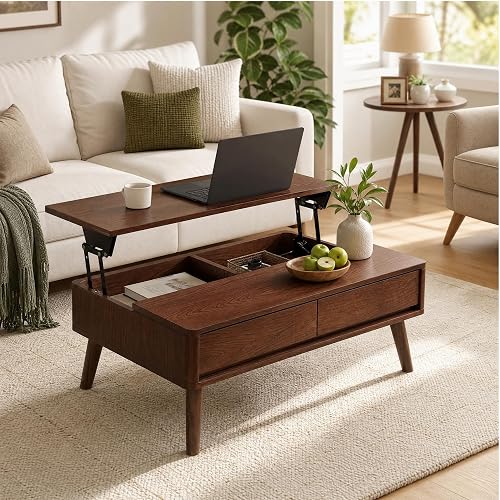
A vasagle lift top coffee table gives you a low surface for drinks and remotes during the week and a raised work surface for laptops, puzzles or dinner when you need one. This guide walks through how to check the dimensions, what to confirm before you buy, how to assemble and set up the lift mechanism safely, and how to style the table so it fits a real living room. By the end, you should know whether this type of table suits your space and how to get it working well on the first day.
What a VASAGLE Lift Top Coffee Table Does Well
Lift-top coffee tables use a hinged or gas-assisted top that rises from its resting height to a higher position, usually somewhere around the height of a sofa seat or a dining chair. Most models in this category combine a fixed base with hidden storage underneath, which makes them useful in apartments and smaller homes where one piece has to cover several jobs. For a broader view of how these designs differ, see Lift-Top Coffee Tables: A Guide to Styles and Uses.
Shopping for one? See our guide: 9 Best Lift Top Coffee Tables (2026): Top Picks for Every Budget.
The main trade-off is height. A lifted top is higher than a standard coffee table, so it can sit closer to the sofa line and feel more like a small dining surface. That is useful for eating or working, but it can make the room feel busier if the table is too tall for the seating. Before you commit, measure the room and your seating as described below.
Step 1: Measure Your Seating and Floor Space
Start with the sofa. Measure the height of the seat cushion from the floor and the distance from the front edge of the sofa to where you want the table to sit. Most people find a gap of roughly 14 to 18 inches comfortable for reaching a cup or plate without leaning forward. Check the walkway too: you generally want at least 30 inches of clear floor for walking past the table and 36 inches if you pull a chair up to it.
Next, compare the table’s resting height and lifted height against your seat height. A common guideline is that the lifted top should sit a few inches above the seat cushion so you can work or eat comfortably, but not so high that it sits at chin level when you lean back. Write both numbers down before shopping or assembling.
Measurement Checklist
- Sofa seat cushion height from the floor
- Sofa depth and distance from sofa front to table
- Clear walkway width on the table’s open sides
- Resting height and lifted height of the table (from the manufacturer’s listing or product sheet)
- Available ceiling clearance if the table will sit under a window or wall-mounted light
- Floor type, since rugs can raise or lower the effective height slightly
Step 2: Check Dimensions and Weight Capacity
Listed dimensions usually cover length, width and height in both positions, along with weight capacity for the top. Confirm the footprint fits the rug or open floor area you plan to use. Smaller living rooms often do better with a table around 36 to 40 inches long, while larger rooms can handle 42 to 48 inches without crowding.
Pay attention to the lifting mechanism’s stated load limit. Manufacturers specify this figure for a reason. Do not put heavy objects on the top when it is raised, and do not use the lifted surface as a seat or step. If you plan to store heavier items inside the base, confirm the storage capacity and keep the load evenly distributed.
| What to Check | Why It Matters | Where to Find It |
|---|---|---|
| Resting height | Sets how the table sits against the sofa | Product listing or spec sheet |
| Lifted height | Determines suitability for eating or laptop use | Product listing or spec sheet |
| Top footprint | Must fit the room without blocking walkways | Product listing |
| Load limit | Protects the lift mechanism | Manual or product page |
| Storage interior size | Shows what you can actually fit | Dimension list or photos |
Step 3: Prepare for Assembly
Lift-top tables come with a manual and a hardware bag, and many include a set of hex keys. Lay everything out on a clean, soft surface such as a blanket or rug to protect the finish. Count the parts against the packing list before you begin. Missing hardware is far easier to solve before the table is half-built.
Tools and Supplies You Will Need
- The included hex keys or a matching hex key set
- A Phillips screwdriver
- A rubber mallet or padded hammer for tapping stubborn joints
- A second person to hold the top during mounting
- A soft blanket or cardboard to protect the surface while you work
Step 4: Assemble the Base and Lift Mechanism
Follow the manual’s order exactly. Most VASAGLE designs attach the legs or base frame first, then connect the lift hardware, and finally mount the top. Hand-tighten each fastener first, then tighten all of them in a crisscross pattern once the frame is square. Overtightening one corner can throw the top out of alignment.
When you attach the top, make sure the lift arms or hinges sit in their brackets fully. Lower the top slowly and listen for any grinding or catching. If the top resists, stop and recheck the orientation of the hinge pieces rather than forcing it.
Setting the Lift Mechanism
Once the top is attached, raise and lower it several times by hand. The motion should feel smooth and controlled. Many gas-assisted lifts resist at the start and then move freely. If the top drops too fast or stays stuck, check that the gas struts or springs are seated correctly and that no cable or storage item is interfering with the arm.
Step 5: Place the Table and Test It
Position the table where you measured earlier, then test both the resting and lifted positions with real use in mind. Sit on the sofa and reach for the surface. Lift the top and check whether it clears the sofa armrests and any nearby lamp or wall. Make sure the table is level on your floor. If it rocks, adjust the leg levelers, which many models include, or add a thin felt pad under one foot.
If the table sits on a rug, check that the base is fully on the rug or fully off it. Partial placement can make the legs wobble and can stress the lift mechanism over time.
Step 6: Style the Table for Everyday Use
A lift-top table can look busy if you store and display too much on it. Keep the resting surface simple: one or two decorative objects, a small plant, and maybe a book stack. Reserve the lifted surface for tasks, so it stays clear when you need it. For ideas on keeping a compact layout balanced, see Mcm Lift Top Coffee Table: How to Choose, Measure and Style One.
Use the storage inside the base for items you reach for less often, such as remote controls, coasters, or board games. Group similar items in baskets or small trays so they are easy to lift out. If the table sits in a small room, pick one visual anchor, like a single vase or a stack of books, and keep the rest of the surface open.
Common Mistakes
- Buying by footprint alone. A table can fit the floor and still block the walkway or hit the sofa when raised. Check the lifted height and swing path.
- Overloading the top. Heavy plates, stacks of hardcover books or ceramic pots can exceed the lift’s comfort zone. Stay within the stated load limit.
- Forcing stuck parts. If the top won’t move, it is usually a misaligned bracket or a pinched cable. Forcing it can bend hardware.
- Skipping the level check. An uneven table can make the top bind as it lifts.
- Storing liquids or fragile items in the base. Spills and impacts inside the storage bay can damage contents and the finish.
- Letting kids or pets use the lifted top as a perch. Keep the lifted surface clear of climbing and weight that exceeds the rated limit.
Tips for Long-Term Use
- Lift and lower the top gently rather than letting it drop, which reduces stress on the hinges and struts.
- Wipe the surface with a soft, slightly damp cloth and dry it immediately. Avoid harsh cleaners on painted or veneered finishes.
- Check the hardware every few months. Retighten any loose screws and make sure the top sits flush.
- Keep the mechanism free of dust and debris inside the base, which can slow movement over time.
- If the table sits near a radiator or sunny window, watch for warping or finish changes on the top.
Recommended gear
A few simple supplies make assembly and daily use easier. Choose items that match the table’s finish and floor type.
- Felt furniture pads: Thin self-adhesive pads help the base sit level and protect hardwood or tile. View on Amazon
- Soft microfiber cloth: A gentle option for wiping the top without scratching the surface. View on Amazon
- Storage baskets with handles: Fabric or woven baskets sized to fit the base keep remotes and small items organized. View on Amazon
- Cable organizer clips: Useful if a lamp or charger runs near the table, keeping cords out of the lift path. View on Amazon
FAQ
How do I know if a lift-top coffee table is the right height for my sofa?
Compare the table’s resting and lifted heights with your sofa seat height. For eating or laptop use, the lifted top should sit a few inches above the seat cushion. For everyday drinks, the resting height should sit just below the seat so you can reach easily.
Do I need a second person to assemble the table?
Many people can assemble the base alone, but a second person is helpful when mounting the top and lift arms. Holding the top steady while aligning the brackets reduces the risk of bent hardware.
Can I use the lifted top as a dining surface?
Yes, for light meals and small plates. Check the stated load limit and avoid placing heavy dishes, hot cookware or large amounts of weight on the top. Keep the surface stable and level.
Why does the top feel stiff when I first lift it?
Gas-assisted lifts often resist at the start of the motion and then move more freely. Lift and lower the top a few times to let it settle. If the resistance persists or the top drops suddenly, check the strut seating and consult the manufacturer’s support documentation.
How do I keep the lift mechanism working smoothly?
Keep the storage bay and hinge area free of dust and objects, lift the top gently, and retighten the hardware periodically. Avoid overloading the top and do not force it past a stuck point.
Can I put a rug under the table?
Yes, as long as the entire base sits on the rug or fully off it. A partial placement can make the table wobble and place uneven stress on the lift components.
Is storage inside the base safe for everyday items?
It is fine for dry, lightweight items like remotes, coasters and books. Avoid storing liquids, heavy objects or anything that could damage the finish or interfere with the mechanism.
What should I do if a part is missing from the box?
Contact the seller or manufacturer with your order details and the part description from the manual. Do not substitute hardware from other furniture, since the wrong size can damage the table or cause unsafe loosening.
Conclusion
A vasagle lift top coffee table can serve as both a daily surface and a raised workspace when the size and height are right for your room. Measure your sofa and walkways, check the stated dimensions and load limit, and assemble the lift carefully in the order the manual specifies. With the right placement and a simple styling approach, the table can handle drinks, meals and work without crowding the space.
Related reading
- Wystfield Coffee Table with Lift Top: Setup, Sizing and Styling Guide
- Wildenauer Lift Top Coffee Table: How to Choose, Measure and Use One
- Torlanta Lift-top Coffee Table: Sizing, Setup and Styling Guide
- Todoe Lift Top Coffee Table: Sizing, Setup and Styling Guide
Ready to choose one?
About Claire Whitaker
Claire Whitaker is part of our editorial team and reviews and edits our living-room tables guides, checking product details against manufacturer specifications and owner feedback.