 By Claire Whitaker
Updated November 2026
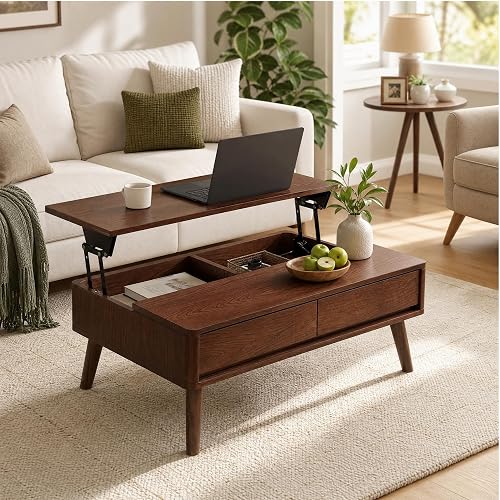
A Johurst coffee table with lift top gives you a low surface for drinks and décor that rises to a higher working height for laptops, puzzles, meals or hobby projects. This guide walks you through checking fit, measuring your room, setting up the lift mechanism safely, and styling the table so it looks intentional in a small or open-plan living space. Use it before you buy, or after delivery when you’re ready to set things up.
What a Johurst Lift-Top Coffee Table Is Built to Do
A lift-top coffee table is a standard low table with a top that rotates or slides upward on a hinge or gas-assisted arm. The main advantage is flexibility: one piece of furniture covers two functions without needing a separate dining or desk surface. Johurst lift-top designs follow this general format, so the guidance below applies to the type of table rather than any single finish or trim detail. Check your own model’s manual for the exact weight limit and lift specifications, since those figures vary between versions.
Shopping for one? See our guide: 9 Best Lift Top Coffee Tables (2026): Top Picks for Every Budget.
Lift-tops suit people who eat on the sofa, work in the living room part of the day, or want storage hidden beneath a surface. They are less ideal if you need a fixed, very sturdy surface for heavy items or a child’s frequent climbing. For a broader overview of this furniture category, see Lift-Top Coffee Tables: A Guide to Styles and Uses.
Step 1: Measure Your Room and Sofa Before You Buy
Sizing is where most lift-top purchases go wrong. A table that fits the floor plan can still feel cramped once the top is raised, or block walking paths when the sofa is pulled out. Measure first, then compare those numbers against the Johurst listing dimensions.
- Measure the length of your sofa, from arm to arm.
- Note the distance from the front edge of the sofa cushion to where you want the table to sit. A common target is 14 to 18 inches, which keeps the table within easy reach without crowding your knees.
- Measure the sofa seat height. The top of a coffee table is often recommended to sit within a few inches of the seat cushion height so it is comfortable to reach from the sofa.
- Measure the clearance around the table on all sides. Plan for at least 18 inches of walking space where possible.
- Measure the raised height of the top with the lift fully open, and compare that to your seating position. You want the raised surface to land at a comfortable eating or working height when you are sitting on the sofa or a chair.
Checking Height Compatibility
Once you know your seat height, compare it to the table’s lowered height and its open height. If the lowered height is much higher than your seat, the table will feel like a side table rather than a coffee table. If the open height is too low, you will end up hunching over to eat. Use painter’s tape on the floor to mark the table footprint at full size before you commit to a purchase or delivery window.
Step 2: Understand the Lift Mechanism
Most lift-top tables use one of two systems: a manual friction or hinge arm, or a gas-assisted lift. Knowing which you have changes how you should open and close the top.
- Manual hinge arm: You lift the top by hand, usually from one side or the front edge. Both hands are recommended to avoid racking the frame.
- Gas-assisted lift: A spring or gas strut helps raise the top, and it may hold the top open at a set angle. Lower it slowly to avoid pinching fingers.
- Sliding or leaf-style top: Some designs slide the top sideways or extend a leaf. These need the locks released first.
Check the manufacturer’s manual for the exact motion. Forcing a top that is locked or misaligned can damage hinges and the frame.
Step 3: Assemble and Set Up the Table Safely
Most lift-top tables ship partly assembled or in flat-pack form. Before you start, clear a workspace on a rug or blanket to protect the finish, and gather the hardware and tools listed in the package.
Tools and Supplies Checklist
- Screwdriver or drill with the bit type listed in the manual
- Hex key or Allen wrench set (often included)
- Rubber mallet for seating joints
- Soft cloth and felt pads
- A second person for lifting the top onto the frame
- Level or phone level app
Assembly Steps
- Lay out all parts and count the hardware against the parts list before starting.
- Attach legs or base panels to the frame, hand-tightening first.
- Mount the lift arms or hinge brackets to the top and frame as shown in the diagram.
- Tighten all fasteners in a cross pattern to keep the frame square.
- Test the lift motion slowly with the table empty before adding any load.
- Level the table by adjusting the feet or adding shims under the legs.
- Attach felt pads to the bottom of each foot to protect floors.
Safety Checks After Setup
Before using the table for meals or heavy items, confirm the top stays open at its set position and closes without snagging. Keep fingers and cords clear of the hinge area. If you have young children or pets, make sure the closed top is secure and that the lift cannot be pulled open unexpectedly. Consult the manufacturer or a qualified furniture installer if a part is damaged, missing or does not fit.
Step 4: Style the Table for Small and Open Spaces
A lift-top table has more visual weight than a basic coffee table, especially when raised. Styling should balance function with a clear, uncluttered look.
- Keep the lowered top to two or three objects: a small plant, a tray, and one book or candle.
- Use a tray to group items. This makes it easier to lift everything off when you open the top.
- Choose decor that does not block the lift path. Tall vases or lamps near the hinge side can interfere with opening.
- Pair the table with a rug that is large enough for at least the front legs of the sofa and chairs to rest on.
- In a small room, a slightly lower table height makes the space feel more open.
For more ideas on pairing lift-tops with other living room pieces, see Wystfield Coffee Table with Lift Top: Setup, Sizing and Styling Guide and Ashley Lift-Top Coffee Table: How to Choose, Measure and Style One.
Common Mistakes to Avoid
| Mistake | Why It Causes Problems | Better Approach |
|---|---|---|
| Buying by footprint alone | Ignores the raised height and reach from the sofa | Measure open height and seat height together |
| Placing the table too close to the sofa | Limits the top from opening fully | Test the full open arc before final placement |
| Overloading the top | Stresses the hinge or lift arms | Keep heavy items on a sturdy surface and follow the stated load limit |
| Skipping the level check | Uneven legs cause the top to bind or close unevenly | Level the frame before final tightening |
| Storing heavy objects inside | Can overload the frame and make lifting difficult | Use interior storage for light items only |
Tips for Long-Term Use
- Wipe the top with a soft, slightly damp cloth and dry it immediately. Avoid harsh cleaners on the finish.
- Check fasteners every few months and retighten gently if the top begins to wobble.
- Keep the lift mechanism clear of dust and debris.
- Use coasters and placemats when the top is lowered, especially on wood or veneer.
- If you move the table, lower the top and remove decor first to avoid stressing the arms.
FAQ
How high should a Johurst lift-top coffee table be?
Height depends on your seating. Compare the lowered height to your sofa seat cushion and the open height to your normal eating or working posture. Check the listing dimensions and measure your own seating before buying.
Can I eat meals at a Johurst lift-top coffee table?
Many lift-top tables are designed for light meals and everyday use when the top is raised. Confirm the open height is comfortable for your seating and that the top’s stated weight limit covers your dishes and food.
Do lift-top coffee tables need assembly?
Most do. Expect to attach legs, mount the lift hardware, and level the frame. Follow the manual’s order of steps and use a second person for the top.
How do I stop the top from closing too quickly?
If your model uses a gas-assisted lift, lower the top slowly with both hands. Do not let it drop. If the motion feels inconsistent, check the manufacturer’s guidance or contact their support team.
Can I put a tray or drinks on the lift top?
Yes, within the stated load limit. Use coasters for drinks and avoid leaving liquids on the surface when you close the top, since spills can enter the hinge area.
Is a lift-top table safe with children?
It can be, with supervision. Keep fingers clear of the hinge, avoid letting children climb or hang on the raised top, and check that the lift holds securely. For households with young children, consult the manufacturer’s safety notes.
How do I clean the top?
Use a soft cloth with a small amount of mild cleaner recommended for your finish. Dry the surface promptly and avoid soaking wood or veneer.
Should I choose a lift-top table or a regular coffee table?
Choose a lift-top if you regularly eat, work or do projects in the living room and want to keep the space tidy. A standard table may suit you better if you only need a low surface and want the simplest construction.
Conclusion
A Johurst coffee table with lift top works best when you measure your sofa and seat height first, understand how the lift mechanism moves, and set it up carefully on a level floor. Style the lowered surface lightly so the lift path stays clear. With those steps done, the table can handle daily drinks, light meals and quick projects without crowding your living room. Consult the manufacturer’s manual for model-specific weight limits and safety notes before regular use.
Related reading
- Wildenauer Lift Top Coffee Table: How to Choose, Measure and Use One
- Torlanta Lift-top Coffee Table: Sizing, Setup and Styling Guide
Ready to choose one?
About Claire Whitaker
Claire Whitaker is part of our editorial team and reviews and edits our living-room tables guides, checking product details against manufacturer specifications and owner feedback.