By Grayson Holland
Quick answer
Compact living room table options include small-scale coffee tables, versatile nesting sets, space-efficient sofa tables, and movable C-tables. The best choice depends on your need for permanent surface area, flexible configuration, or on-demand side tables.
Furnishing a cozy apartment or a snug living room means every piece needs to earn its place. When floor space is limited, your choice of table becomes a key decision for both function and flow. Fortunately, there are many clever compact living room table options designed to provide surface space without dominating the room. From traditional small coffee tables to innovative designs that tuck away, the right piece can make your space feel more open and adaptable to your daily life.
Small-Scale Coffee Tables: The Classic Anchor
The most straightforward option is a traditional coffee table, just in a smaller footprint. These tables act as a central anchor for the seating area, providing a dedicated spot for drinks, remotes, or a decorative tray. When choosing a small coffee table, proportion is everything. You want enough surface to be useful but not so much that it crowds the walkway between your sofa and other furniture. A common approach is to select a table that is roughly two-thirds the length of your sofa. For a deeper dive on sizing and styles, our small glass coffee tables guide offers detailed advice.
What to look for
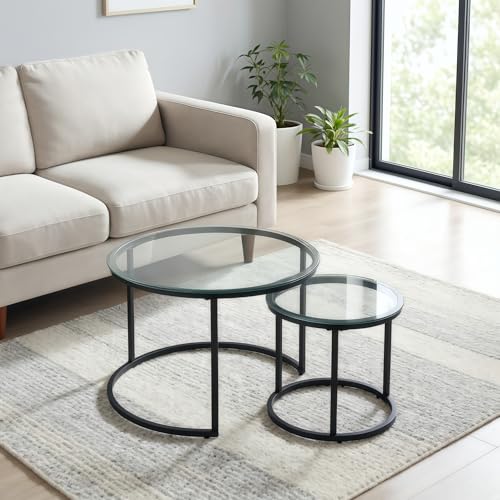
- Clear Surfaces: Glass tops can help a small table feel less visually heavy, making the room appear more open.
- Smart Storage: Some models include a lower shelf or a discreet drawer, offering a place to stash blankets or magazines out of sight.
- Lightweight Design: A table that isn’t too heavy is easier to move for cleaning or occasional reconfiguration of the room.
Nesting Table Sets: Flexibility in a Flash
For maximum versatility, nesting tables are a standout among compact living room table options. Typically sold in sets of two or three, these tables tuck neatly under one another when not in use, taking up the footprint of just the largest table. When you have guests or need extra surface space for projects, you can easily pull them apart. This gives you the flexibility to create multiple drink stations, a longer table surface, or side tables exactly where you need them. They are an excellent solution for rooms that need to function in multiple ways, from solo lounging to social gatherings.
Sofa Tables: The Slim Line Alternative
If a central coffee table feels like an obstacle in a narrow room, consider a sofa table. These long, narrow tables are designed to sit directly behind your sofa, offering a convenient ledge within arm’s reach. They provide a landing spot for lamps, books, or decor without infringing on precious floor space in front of the seating. This layout can make a room feel significantly more open and walkable. While not a direct replacement for a coffee table’s central function, it’s a superb space-saving alternative that keeps essentials accessible.
C-Tables and Swivel Trays: The Personal Sidekick
For the ultimate in personal, movable surface space, C-tables (also called sofa tables or tablet tables) are a brilliant choice. Their unique C-shaped design allows one end to slide over the arm or side of a sofa or chair, bringing a stable table surface right to you. This makes them perfect for holding a drink, snack, or laptop without requiring a large table in the middle of the room. Some models have swivel tops or adjustable heights, adding to their utility. They are perhaps the most adaptable of all compact living room table options, as they can be moved and repositioned in seconds to serve different seats or be tucked completely out of the way.
| Option | Best For | Key Feature |
|---|---|---|
| Small Coffee Table | A permanent central surface; classic living room layout | Defined anchor point for the seating area |
| Nesting Table Set | Flexible surface needs; entertaining; multi-use rooms | Multiple tables that consolidate into one footprint |
| Sofa Table | Narrow rooms; keeping floor space completely open | Surface behind seating, out of the main traffic flow |
| C-Table / Swivel Tray | Personal, movable surface; minimalism | Extends over furniture; goes where you go |
Choosing for Your Space and Habits
Think about how you actually live in your space. Do you often eat on the couch while watching TV? A C-table or a small, sturdy coffee table with an easy-to-clean surface might be ideal. Do you host game nights or need space for puzzles? A nesting set you can expand could be perfect. For those who prioritize an open floor plan for exercise or play, a sofa table or a single, easily movable C-table might be the best fit, allowing you to clear the floor entirely when needed. Remember, in a compact room, furniture that can adapt or be moved is a major asset. For comparisons with larger pieces, see our article on large glass coffee tables.
Safety
Always follow the manufacturer’s assembly instructions and weight limits. For glass tables, ensure the glass is properly secured in the frame or base. To prevent tip-over hazards, especially in homes with children, avoid placing heavy items on one side of a lightweight table or on open shelves. Consider using furniture anchors for any tall or top-heavy items. For more on furniture safety, you can consult the U.S. CPSC Recalls site and the Anchor It! campaign.
FAQ
Can a small living room work without a coffee table?
Absolutely. Many compact spaces function better with alternative solutions like sofa tables, wall-mounted shelves, or a few strategically placed C-tables. The goal is to provide surface space where you need it without blocking pathways. Going without a central table can make a small room feel much larger.
Are nesting tables stable when separated?
Quality nesting tables are designed to be stable both when nested and when used individually. However, stability can vary by design and construction. When shopping, look for tables that feel solid and don’t wobble when you lightly press on a corner. Always check the manufacturer’s specifications and follow any usage guidelines.
What’s the main downside of a C-table?
The primary limitation is capacity. A C-table typically offers a small, personal surface—great for a drink and a plate or a laptop, but not for serving a group or displaying multiple decor items. It’s a specialized tool for individual use rather than a communal hub like a traditional coffee table.
How do I decide between these options?
Map out your room and your routine. Tape out the footprint of a potential table on the floor to visualize the space it takes. List your most common activities in the room. The option that best supports those activities while leaving comfortable walking space around your furniture is likely the right fit. Explore our main guide on glass coffee tables and the broader coffee tables by size category for more foundational information.
References
- U.S. Consumer Product Safety Commission (CPSC): Furniture stability and tip-over guidance, including recall information.
- Anchor It!: Educational campaign on furniture anchoring safety.
- Manufacturer manuals and specification sheets: For assembly, weight limits, and proper use instructions.

About Grayson Holland
Grayson writes about living-room tables. Each guide starts with research into how products are built and what owners report after months of use, and is revised when better options appear.