By Grayson Holland
Quick answer
Choosing a small glass coffee table involves balancing scale, function, and style. Look for a design that fits your seating area proportionally, offers useful features like storage or nesting, and uses the transparency of glass to keep the room feeling open.
Furnishing a compact living room requires smart choices, and the coffee table is often the centerpiece. This small glass coffee table guide is here to help you navigate the selection process. The right table can provide a functional surface without visually cluttering your space, using glass to maintain an airy, open feel. We’ll walk through how to define “small” for your room, plan the layout, choose functional features, and style your table to enhance your entire space.
Defining a “Small” Glass Coffee Table
“Small” is relative to your room and furniture. There’s no universal standard, but we can think about it in terms of common dimensions and proportions. A typical small coffee table often ranges from about 24 to 36 inches in length or diameter, with heights aligning with standard sofa seat heights. The key is scale: the table should be proportional to your seating and leave enough room for comfortable circulation around it.
When considering size, also think about the table’s footprint—the actual floor space it occupies. Glass tables, with their see-through tops, have a smaller visual footprint than opaque tables of the same physical size. This is their superpower in small spaces. A table that might feel bulky in wood or stone can feel perfectly sized in glass. For a broader look at how size impacts your choice, our overview of Coffee Tables by Size provides useful context.
Space Planning for Tight Areas
Careful measurement and planning are essential to ensure your new table fits both physically and visually. Start by mapping your seating area.
- Measure Your Seating: Note the length of your sofa or sectional. A common guideline is to choose a coffee table that is about two-thirds the length of your sofa.
- Check Clearance: Ensure there is enough space to walk comfortably around the table. Aim for at least 18 inches between the edge of the coffee table and your sofa or chairs, and more if it’s a main walkway.
- Consider Height: The table surface should be roughly level with, or 1-2 inches lower than, the seat cushions of your surrounding furniture for easy reach.
Shape plays a big role in flow. Round or oval tables are excellent for tight spaces as they have no sharp corners to navigate. A rectangular table can tuck neatly against a sofa or fit into a narrow space between seating pieces. If your layout is very tight, explore Compact Living Room Table Styles and Alternatives, which includes options like nesting tables or stools that can be moved as needed.
Functional Features for Limited Surfaces
When surface area is limited, every inch needs to work. Look for designs that maximize utility without increasing bulk.
What to look for
- Storage Solutions: Tables with a lower shelf, drawer, or enclosed base provide a place to stash remotes, magazines, or blankets, keeping the main surface clear.
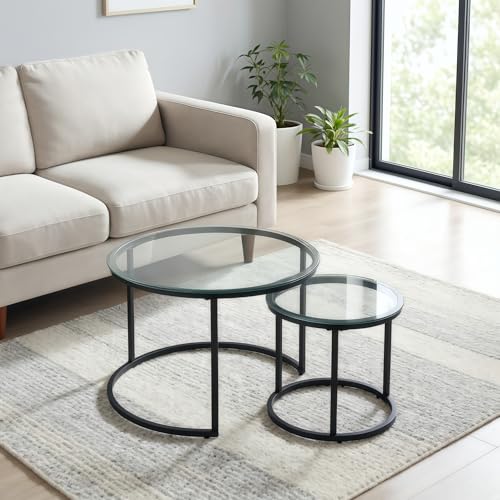
- Nesting or Stacking Designs: These offer incredible flexibility. You can use one small table most of the time and pull out a second or third when you have guests or need extra surface area.
- Multi-Level Tops: A tiered design effectively doubles your display or resting space vertically without increasing the floor footprint.
- Lightweight and Mobile: Tables with wheels or that are easy to lift allow you to quickly reposition them for cleaning, entertaining, or creating more floor space.
Remember, the glass top itself is a functional feature. Its transparency allows you to see and access items on a lower shelf easily, and it makes any built-in storage in the base feel less imposing.
Styling to Enhance a Small Room
A well-styled small glass coffee table can make the whole room feel more curated and spacious. The goal is intentional, not overcrowded.
Start with a foundational tray or a small stack of books to corral smaller items and create a defined surface. Add a single, modest-sized decorative object like a vase, sculpture, or candle. Because the table is glass, consider what sits beneath it—a patterned rug, a tidy storage basket, or even the floor itself becomes part of the visual composition. Keep accessories minimal; one or two items are often enough. A small plant can add life without bulk.
Your choice of base material also contributes to the style and perceived weight. A slender metal frame feels light and modern, while a chunky wood or stone base can ground the space with a more substantial look. Pairing your small table with other transparent or reflective elements, like a mirror or a clear acrylic side table, can amplify the sense of light and space. For inspiration on the full range of styles, visit our main Glass Coffee Tables category.
Safety
Glass furniture requires mindful use. Always follow the manufacturer’s assembly instructions and weight limits. To prevent tipping, ensure the table is on a level surface and avoid placing heavy loads on one side. For households with children or active pets, consider the stability of the design and the edges of the glass. If you have any concerns about the safety or stability of your furniture, contact the manufacturer. For general furniture safety, the U.S. Consumer Product Safety Commission provides guidance, and you can check for recalls at CPSC Recalls. Tall, top-heavy furniture should be anchored to the wall; see Anchor It! for tips.
Small Glass Coffee Table Guide: FAQ
What is the ideal height for a small coffee table?
The ideal height is typically level with or slightly lower than the seat cushions of your surrounding sofa and chairs. This creates a comfortable plane for reaching drinks or books. Most sofa seats are between 16 and 20 inches high, so coffee tables in the 16 to 18-inch range are common. Always check your specific furniture measurements.
Can a small glass coffee table have storage?
Absolutely. Many small glass tables are designed with storage in mind. Look for models with a lower shelf, a drawer integrated into the base, or a hollow base with an opening. The transparency of the glass top makes items on a lower shelf easy to see and access, which is a functional advantage over opaque tables.
How do I keep a small glass table from looking cluttered?
The key is intentional editing. Use a tray to group essential items like a remote and coasters. Limit decorative objects to one or two meaningful pieces. Regularly clear off items that don’t belong. Because the surface is small and transparent, every item is highly visible, so a minimalist approach usually works best.
Is a round or square table better for a small space?
Round tables are often recommended for small spaces because they lack corners, making them easier to walk around and creating a softer feel. They also facilitate conversation in seating areas. Square or rectangular tables can be excellent if you need to tuck the table closely against a sofa or fit it into a narrow gap between seating. Consider your room’s traffic patterns and layout.
Should I consider alternatives to a traditional coffee table?
If your space is extremely tight or your needs are flexible, yes. Options like a pair of nesting tables, a large upholstered ottoman with a tray, or even a few sturdy stools can serve as versatile surfaces that can be moved or tucked away. Our article on Large Glass Coffee Tables also discusses scale, which can be useful for understanding proportion even when shopping small.
References
- Manufacturer manuals and specification sheets: For assembly, weight limits, and care instructions.
- U.S. Consumer Product Safety Commission (CPSC): For furniture safety guidance and recall information.
- Anchor It! campaign: For guidance on anchoring top-heavy furniture.

About Grayson Holland
Grayson writes about living-room tables. Each guide starts with research into how products are built and what owners report after months of use, and is revised when better options appear.